I can’t stop thinking!

Everyone thinks all the time. We think while eating, walking, driving, alone or in a market place! Even while we sleep, our thoughts turns into dreams. We cannot stop this ‘Self-Talk’, which we carry out in our minds in monologues and dialogues, but we can become conscious of what we think about.
Human behaviour and positive psychology have always fascinated me. The realization that human behaviour is mostly influenced by thoughts and thinking patterns, led me into studying thoughts and thinking patterns in humans. It is interesting to see how two or more individuals can look at the same issue or event and think differently, and feel differently about it.
The ability to think is what differentiates the human being from other animals. Thinking is an intellectual or mental exercise aimed at finding an answer to a question or the solution to a problem. Thoughts are pictures of the mind that have constructive or destructive possibilities.They are more than imaginations. Thoughts are created by you, deliberately. They can hold you bondage or liberate you.
Thoughts Create Reality.

All human achievements and creativity are as a result of thoughts. Everything created by man came from someone’s thinking. If you look around your home, your office, or school, every concrete thing you see was first conceived as a thought in the mind – the chairs, the windows, the flower vase, the electronic devices, even your clothes, – everything first appeared in someone’s mind! Whatever you do, you first conceived in your mind as thought, whether you want to go shopping, write a letter, make a sandwich or just sit down. You think of these things before you do them. Your thoughts then become your actions. Thoughts also become words. Thoughts include both the words you hear in your head and the words you speak out loud. Your thoughts determine whether your words and actions will be positive or negative.
Thoughts, can become negative and distorted, and the outcome therefore can become destructive and self-defeating. What we think about affects us physically and emotionally. “You feel the way you think.”
Positive and Negative Thoughts
- Positive thoughts are thoughts of what you love, what makes you happy, what leads to constructive action.
- Negative thoughts are thoughts of what you do not love, what you do not want, and what makes you feel bad.
It is believed that the average adult has over 60,000 thoughts a day. Over 80% of these thoughts are negative! ( Aha! It means that only less than 20% of your thoughts are used for positive constructive purposes). In most cases, the 80% of your thoughts may not necessarily be relevant to the situation you are in at the time. It may be reliving some things that happened in the past or rehearsing or imagining possible future situations. More often than not, it imagines things going wrong and negative outcomes.
Thought is associated with the mind and therefore plays on your emotions and feelings as well as all associated unconscious mental-emotional reactive patterns. The way you think about aspects of your current life or past experiences can move you from healthy, normal distress to problematic psychological disturbance and ultimately ill-health.
According to neurologists, 80% of the illnesses that plague us today are as a direct result of our thought life. ‘Research shows that 75-98% of mental, physical and behavioral illnesses come from our thought life. We are constantly reacting to circumstances and events, and as this cycle goes on, our brain’s become shaped by the process in either a positive, good-quality-of-life direction or a negative, toxic, poor-quality-of-life. It is the quality of our thinking and choices and reactions that determine our brain architecture and resultant quality of the health of our spirit, soul, and body.’ (Dr. Caroline Leaf, neurologist).
I have listened to people who came to me in obvious distress, weeping, complaining, angry, and moaning about one thing or the other, – their workplace, their spouses, their children, or life in general. I listen with patience and can’t help sympathising with them, knowing that they are creating more of their misery through their mindset and negative thinking patterns. They are blaming, judging, accusing, fearful, and exhibiting hatred. They do not realise that all these emotions and feelings that they send out do not do them any good. I have tried to get people challenge these thinking errors. Many do not believe anything is wrong with the way they think. One distressed lady once said to me with great emphasis, “I am thinking right. It is my thinking that has brought me this far in my life.” She didn’t realise how true this was! She has been creating the misery she was in by her own thinking habit. Not much could be done for her because as the saying goes, “Until you can change a man’s thinking, you cannot change his life circumstances for the better”.
Thinking errors are thoughts that follow a negative and destructive path, at times leading to depression, stress, fear, insomnia, eating disorders, stomach ulcers, addictions, anxiety, and other wrongful and disturbed feelings or negative outcomes. 
Negative or sad events can naturally create negative emotions but the thinking pattern can make the these emotions healthy or unhealthy. Healthy negative emotions are the response to a negative event , like the death of a loved one. It should be appropriate to the event, lead to a constructive action, and should not significantly jeopardize the rest of your life.
You may be familiar with these old sayings:
- “As a man thinketh so he becomes.”
- “You Feel The Way you Think”
- “You become what you think about.”
- “You attract things that you think about to yourself”
- “Your thoughts create your world.”
These sayings not only suggest, but indicate that thoughts are powerful, they are magical.We are consciously or unconsciously creating the reality we experience. The way this works can be explained by two of the Universal Laws, The Law of Vibration and The Law of Attraction.
Relationship between Thoughts, The Law of Vibration and The Law of Attraction.
I am not an expert in quantum physics, but I will try to explain in a very simple layman’s language. Research and experiments in quantum physics, and neurobiology seem to indicate a connection between the mind and physical matter. Quantum physics shows that at the sub-atomic level, there is nothing like matter, everything is pure energy and there is no void between us and our outer world. Some call this the Unifield or the Matrix.
The Law of Vibration states that everything in the Universe is pure energy that vibrates all the time and at different frequencies.
This includes us, humans! However your frequency is different from the frequencies of other things in the universe. This differences in frequencies make you believe that you are separated from what you see around you – both animate and inanimate things. We are not separated but in a Unifield of energy. Our thoughts affect our emotions and feelings and these are also energies in the vibrating universe.
Everyone now talks about The Law of Attraction, but The Law of Vibration is the law that serves as the foundation for the Law of Attraction. 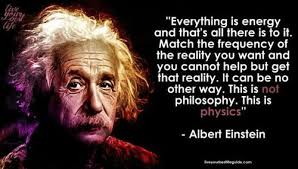 As energy vibrates it attracts similar energies. In quantum physics, like attracts like. Therefore, positive energy will attract more positive energies and negative energy will attract more negative energies. These will clump together and attract similar frequencies into our reality. Positive thoughts will attract more positive thoughts, calling into reality, positive circumstances. On the other hand, negative thoughts will attract more negative thoughts, calling into existence, negative realities.
Our mind is like a garden. What you sow, you reap. If you sow thoughts of prosperity, abundance and health, these are what you reap in your physical world. If you plant thoughts of fear, lack or failure, these you will reap in your material world.
These new discoveries show that our bodies and our world work from real to the unreal and from the unreal to the material world.
Positive thoughts make us feel good while negative thoughts make us feel bad or low. Our emotions and feelings are indicators of the type of thoughts we are having. Positive thoughts vibrate on higher frequencies than negative thoughts. Feeling is vibrational and when we say we feel good, it simply means that we have a high vibrational frequency, and we tend to attract into our reality, ideas, people, things and circumstances that will keep us feeling good. When we have negative thoughts, we feel bad and so attract negative energies that translate as negative ideas, events, people, things and circumstances that will manifest in our material world. If you want to raise your vibration and manifest good things to your reality, choose thoughts that cause you to feel emotionally good, – thoughts of love, prosperity, good health and abundance.
Become aware of your Thoughts
We cannot stop thinking but when our thoughts are not used for positive creative purposes, it becomes necessary to control or manage them. When you know that your thoughts and emotions are vibrating ( Law of Vibration) and you know that “like attracts like” (Law of Attraction) you will endeavour to create what you want in your life just by altering your thoughts and emotions. Unfortunately, your beliefs and upbringing feed your thoughts. But you are the captain of your thoughts. When you catch ourselves thinking negative thoughts, you could deliberately steer it around. This may not always be easy, because when you feel angry, upset, offended, depressed, you actually want to dwell on these negative feelings caused by negative thoughts which in turn create more negative feeling! It becomes a vicious circle. With some practice we can create a habit to minimise negative thoughts in our lives.
Tips for creating through our thoughts
- Become aware of the train of your thoughts
- Learn to recognise how your beliefs and upbringing feed your thoughts, which then influence your feelings, attitudes and behaviour.
- Have clear ideas of your desires in life.
- Use your emotions or feelings as indicators of your thought frequencies.
- Focus on thoughts that make you feel good, thoughts of the good things you want in your life, thoughts of what you love.
- Learn to Ignore negative thoughts that will not serve your ultimate desires in life, thoughts of fear, lack, disease, and failure.
How can we keep our thoughts positive? The aim is to develop a habit of doing or focusing on things that make you feel good, things that will raise your vibrational frequencies, things that will attract positive energies. Here are a few tips:
- See in your mind’s eye, the desires of your heart. As often as possible, visualize what you desires in life.
- Challenge negative thoughts. Do not believe every negative thought that flies into your mind. “When you change the way you look at things, the things you look at change”.
- Try to live in the present. Living in the present means giving your full attention to the good aspects of what is happening now – whether you are eating, at your work place, with your spouse, or your children, in a bus. Enjoy this NOW.
 Focus at what is good about these things now. Most of our negative thoughts are of things in the past, (what we should have done or not done , what had happened to us or what did not happen to us, etc), or the worry of things in the future, (how is this going to turn out? What if ..).
- Always show gratitude and appreciation. Be thankful. Count your blessings often. Think on what you have. Seek out something to be grateful for. Replace a negative thought with this.
- Believe that deep down everything is alright. No matter the situation, know that all things do work together for good, even when it does not seem so. Our spiritual beliefs are based on this.
- Do something you like or enjoy – read, paint, or listen to your favourite music. Music is an amazing vibrational tool that raises energy frequencies. Read inspiring books.
- Dance if you can, on your own, or with a group. Dancing has been documented as one of the good-feeling activities.
- Exercise. You don’t have to join at a fitness club. Simple long walks, cycling, stretching, or yoga movements are good for the mind. Focus on the good images you witness.
- Choose your friends carefully. ‘Be careful who you are yoked to’. Avoid friends that make you feel bad or friends that tell you things to make you feel bad.
- Attend interesting shows or visit places of interest and just enjoy the atmosphere.
- Stop judging, minimise complaining and playing the ‘victim’ game. Don’t think everybody and everything is working against you.
- Practise random acts of kindness. Do something good for someone. When you radiate pure love outside, it raises your vibration and brings love back into your life.This in itself helps you feel good.
- Make a Smiling Face and Laugh! This is one of my favourite tools. I use this most of the time for myself and with my clients. Make a smiling face each time you catch yourself harbouring negative thoughts. Hold the smile and count to 10.
 You notice that the train of thought is broken and you might end up laughing. Try this now!
- Wear a rubber band on the wrist. Pull this band to snap on the wrist each time you fall into toxic thoughts. The shock stops the thoughts accumulating and gives you the chance to realign your thoughts.
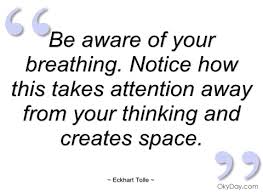
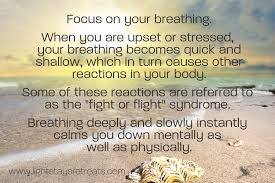
- Inhale deeply and hold your breath for a count of 10. Exhale slowly. This dissipates the train of negative thoughts which are released when you exhale. You can then replace with a thought that makes you feel better.
You may have other ways you use to control negative thoughts and feel good. Please share these with us. The use of drugs or medication is not an option!
Think right, feel good and create a happy world for yourself and others!



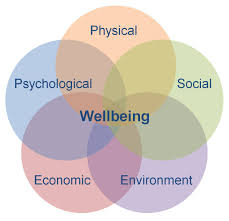
 Well-being is strongly linked to happiness and life satisfaction. Positive well-being requires heightened personal development which gives a sense of self-fulfillment, a feeling of having a purpose and connection with others and your environment. When people feel they have a purpose in the world, they feel that they belong, that they matter. Therefore personal development, (knowing who you are, your potentials and capabilities, and being able to develop these), is crucial to achieve a feeling of wellbeing.
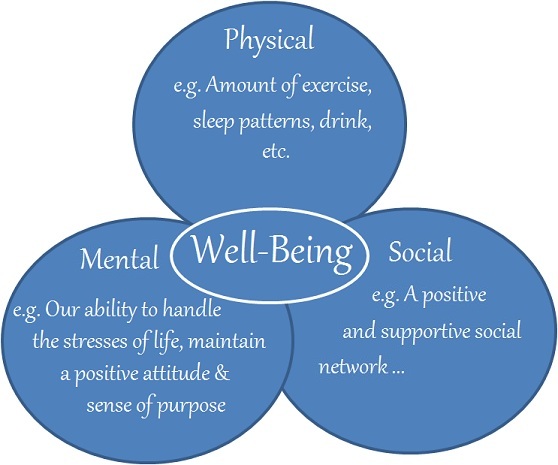 The Physical body with all the external interfaces, affect your internal physiology. Emotions – the way you feel, and the way you think also affect your physiology. The way you see others and interact with, or react to others, the way you see your environment, affect your behaviour, your physiology and ultimately, your wellbeing. Your beliefs and spiritual outlook in life influence the way you think, the way you behave, the way you see others and your circumstances. These in turn affect the way you feel and all contribute to your Well-Being!




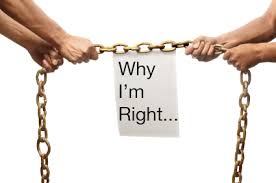

 Just listening to the other person’s point of view brings him or her closer to you and moreover, you may even learn something new! When you are willing to listen to people, they feel a sense of value, and would more likely want to listen to you and get closer to you. Do not prolong an argument. In this way you can reduce unnecessary stress and maintain your sense of well-being.

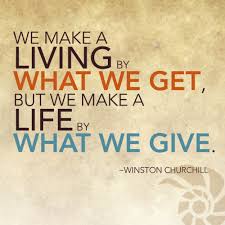 express yourself in words, and these words inspire others. Even a smile is something if you give it away. Each of us has a personal calling or purpose that is unique. Develop what you love doing and then find a way to offer it to others in form of service.






 Philo Ugbor 's Blog