
Have you ever wondered how significant your life is? Have you wondered if you make a difference – if what you do affects the universe, or, if your actions really do matter to this world you live in? Well, everything you do matters – your actions and reactions matter, not just for you but for everyone else!
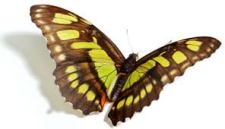
The Butterfly Effect is the concept that small causes can have large effects. The expression was used with weather prediction but has became a metaphor used in everyday life situations. The theory was first presented by Edward Lorenz in 1963 to the New York Academy of Science and basically states that:
A butterfly could flap its wings and set molecules of air in motion, which would move other molecules of air, in turn moving more molecules of air—eventually capable of starting a hurricane on the other side of the planet.
Though it uses the fluttering of the butterfly as a metaphor, it is a theory that everything matters. Scientists have come to accept the authenticity of this theory and it has been accorded the status of a law:
“The Law of Sensitive Dependence Upon Initial Conditions” or “The Chaos Theory”.
When you change even the smallest of life’s details, you completely change its outcome. This theory becomes even more authentic today as outer space scientists, using the Chandra X-ray Observatory, have observed that the space we think is empty in the universe is actually not empty but filled with unique electro-magnetic energy that connects everything in the universe!
Examples of the Butterfly Effect :
Historians agree that the trigger for the World War 1 was the assassination of the Archduke, Franz Ferdinand, heir to the Austrio-Hungarian empire and his wife, by a young Yugoslav nationalist, Gavrilo Princip in Sarajevo, in June 1914. This had the butterfly effect that led to the most brutal world war involving over 65 million military from 30 countries. This war among several other outcomes, led to the death of over 17 million people and another 20 million wounded or disabled. That war changed the face of the world!
The invention of the WorldWideWeb (www) in 1989 by the English scientist Tim Berners-Lee is another example with a butterfly effect leading to the present explosion in the social media, the Facebook, Google, Yahoo, Smartphones,…… connecting people all over the globe. You can think of thousands of the continuing ‘butterfly effects’ of this one invention.
So it is with our lives. Think about the outcome of your life by the ‘simple’ chooses you made. Consider what triggered these chooses and where they’ve led you and people associated with you to, – the schools you attended, where you live, your work, how you met your spouse …..
Now, let us consider our bodies. Things we choose to eat, how we think, what we say, our emotions, and life styles, all have butterfly effects that result in the physical, physiological and psychological states we find ourselves in as individuals. These states in turn affect our health, our relationships, our families, our businesses. Habouring anger, frustration and hatred sets a butterfly effect that not only causes malfunctioning of the body and ill health, but also unpleasant relationships.
Even the smallest step we take in our lives can change the course of our lives and those of others immensely. A simple act of love or gratitude can have a butterfly effect that can lead to unforeseen consequences over time. Take a moment to think about this. Let us live our lives ‘awake‘, consciously knowing that our actions and reactions matter to the wellbeing of the Universe.
 At this period, despite all natural and man-made turbulences and political uncertainties, allow yourself to remember and believe that ‘all things work together for good’. As William Shakespeare put it,
 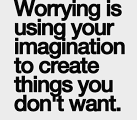 Worrying is a function of the imagination. Without imagination, there would be no worry! If worry does not solve a problem or has the potential of solving a problem, then, learn to let go of it.Worrying can become habitual and chronic and in that case may negatively affect your mood and your health.
 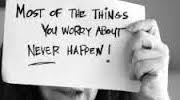 Note that



 I imagined the textile mills where even more laborers spun the cotton into yarns or thread and the production of the cotton textile – the textile which have now become the cover of my mattress, the bed shee













 People live for love, sing for love, write poems for love, do funny unbelievable things in the name of being in love. People will even kill for love! We find quotes like, ‘You are the apple of my eyes’, ‘I can never live without you’,‘ My heart yearns for you alone’; ‘Love is blind’. You can remember dozens of these sayings. Perhaps you have used some yourself.
  Most popularly and universally used is the Heart. It is believed that love resides in, and emanates from the heart.
  Other symbols are, the pairing swans, the pigeons and the doves known as the love birds; the rose flower- a symbol of perfection; the harp – a symbol of love in lyric arts, poetry and music. In China, the maple leaf is an emblem of lovers! Chocolate is also a love symbol and is believed to have aphrodisiac qualities.
 When Valentine’s actions were discovered, Claudius ordered that he be imprisoned and put to death. Valentine’s soft spot for young lovers earned him the admiration of lovers and young couples.
 He is seen as a mischievous, winged child armed with bow and arrows aiming at hearts of lovers, causing them to fall deeply in love! The arrows signify desire and emotions of love. In ancient Greece he was known as Eros, the young son of Aphrodites, the goddess of love and beauty. To the Romans he was Cupid, and his mother was Venus.
 Getting struck by Cupid’s arrow may very well take your breath away and make your heart race this Valentine’s Day but, most of our body’s chemistry is controlled by the brain. “Falling in love” is not an exception. We call it love. It feels like love. But this most profound of all human emotions is probably nature’s beautiful way of keeping the human species alive and reproducing. We are basically animals with inborn biological instincts, and your brain is creating powerful hormones to get you to mate. Research scientists have found that a location at the base/ bottom of the brain is responsible for the triggering of the production of hormones and chemicals that give the feeling of falling in love. “Falling in love” is simply Mother Nature making sure that you find a mate and procreate! Dr. Renshaw, of Loyola University puts it this way:
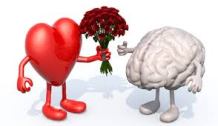 Dr Helen Fischer, the well renowned expert on the biology of love and attraction of Rutgers University in the U.S.A. has carried out numerous researches on the love areas in the brain and has proposed 3 stages of love, namely:



 I look at the happenings. There were other experiences and events, likes and dislikes, anxieties and fears which have all come and gone!
  God-self is ‘God in you‘ created in the image of God.



 Philo Ugbor 's Blog